Office Breakfast Catering: Ordering Tips And Setup Guide
A good breakfast can change the mood of a morning meeting before the first slide appears.
Quick Summary
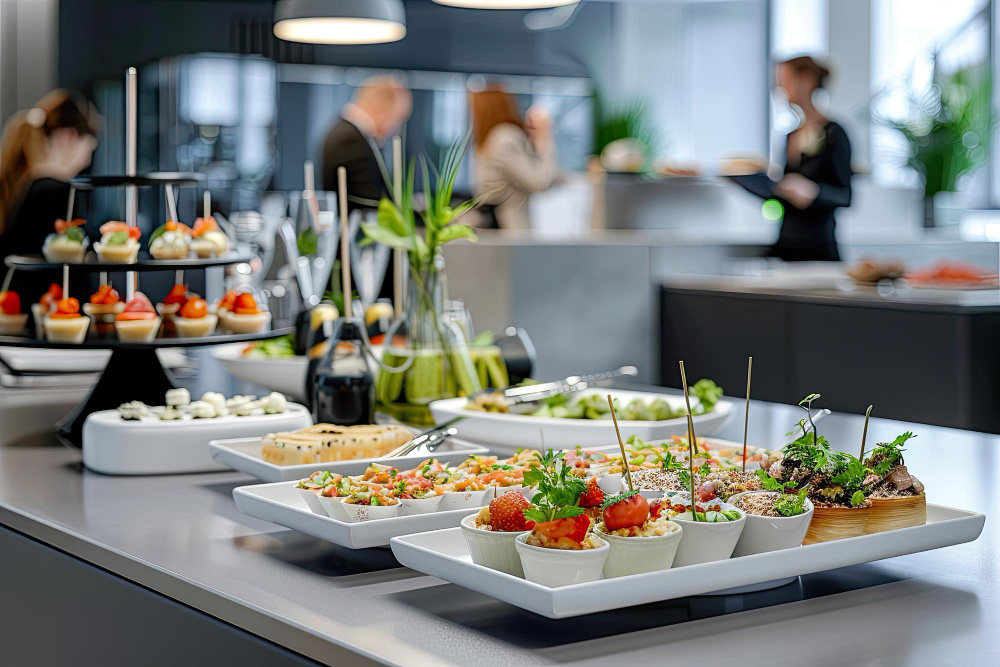
A well-planned breakfast lifts energy and sets a collaborative tone before a morning meeting begins. Confirming headcount early, setting a per-person budget, and timing delivery 20 to 30 minutes ahead helps prevent last-minute stress. Dietary needs, clear labels, and the choice between family-style trays or boxed meals shape how guests experience the meal. Thoughtful table placement, a separate coffee station, and a cleanup plan keep the morning on schedule.
A good breakfast can change the mood of a morning meeting before the first slide appears. People arrive a little earlier, conversations start sooner, and the room feels more relaxed. Planning office breakfast catering takes some thought, though.
Timing is tight, coffee runs out quickly, and dietary needs vary across even a small team. A bit of preparation on the ordering and setup side goes a long way toward a meal people enjoy and remember.
Why Office Breakfast Catering Makes Sense for Morning Meetings
Morning meetings come with a familiar problem. Attendees often skip breakfast to beat traffic, then sit through a long agenda on an empty stomach. Focus drops, and energy fades before the important items come up, so feeding the room early helps people settle in and stay engaged.
Breakfast also sends a simple message to staff and visiting clients: their time and effort are valued. At Hungerhub Inc., we see this in action every day. A shared meal before a quarterly review or training day sets a collaborative tone that carries into the discussion.
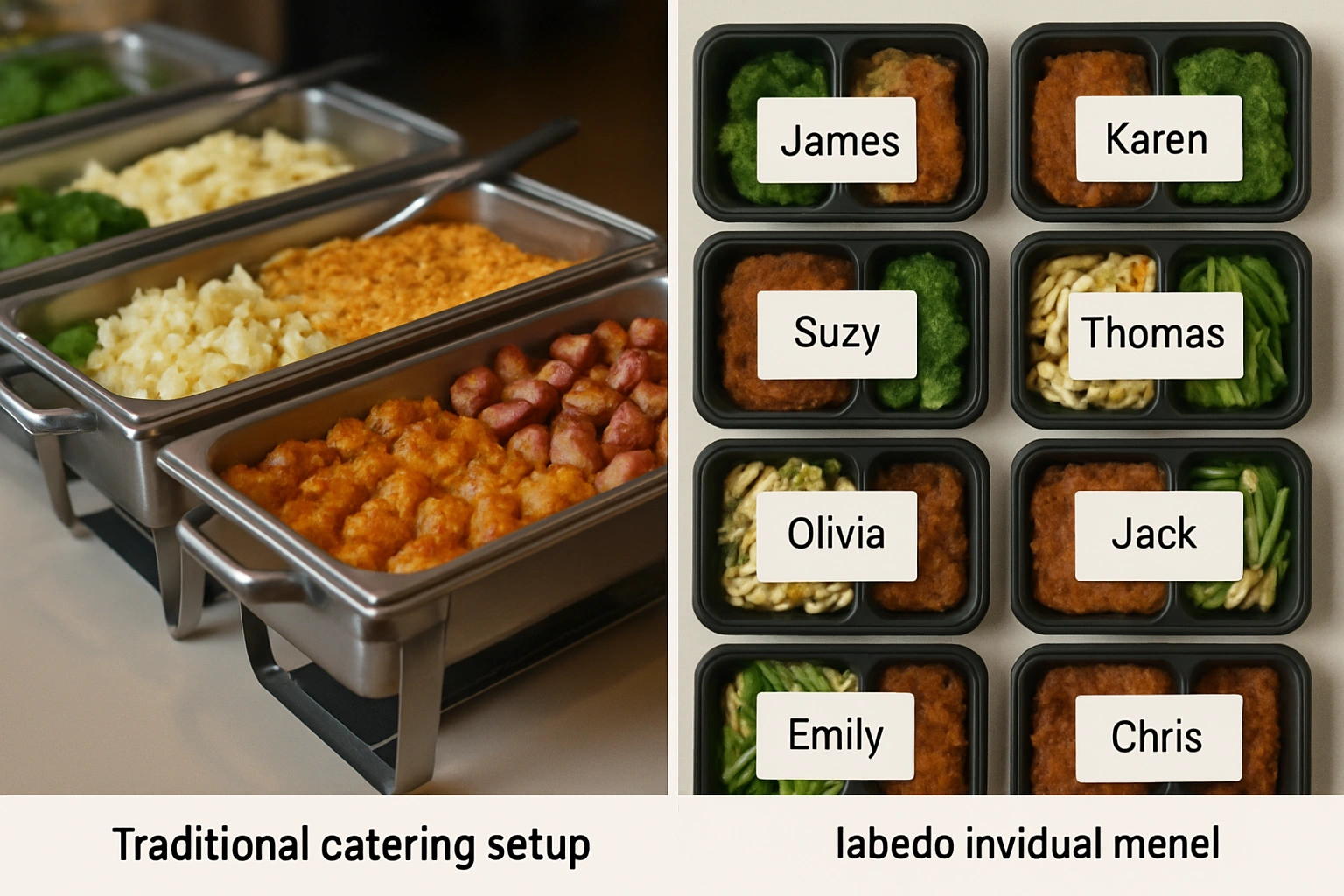
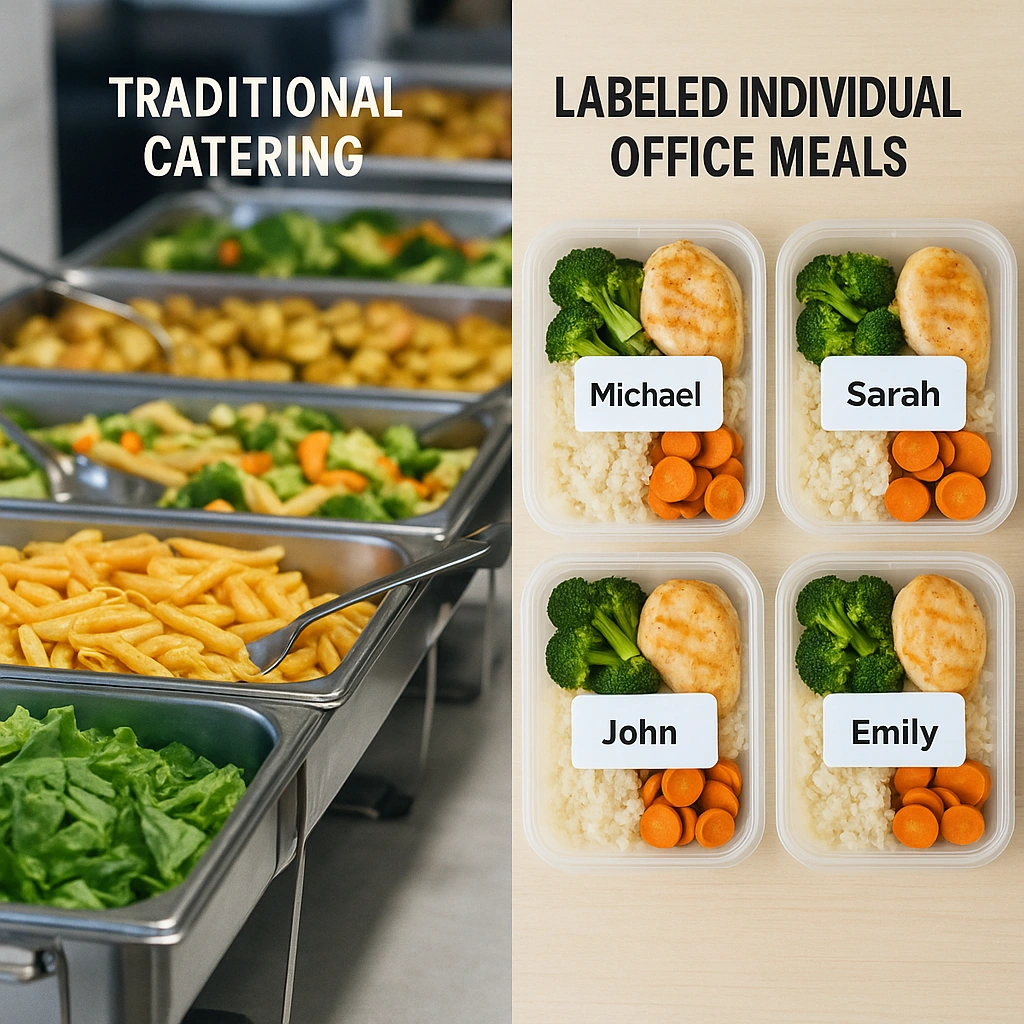
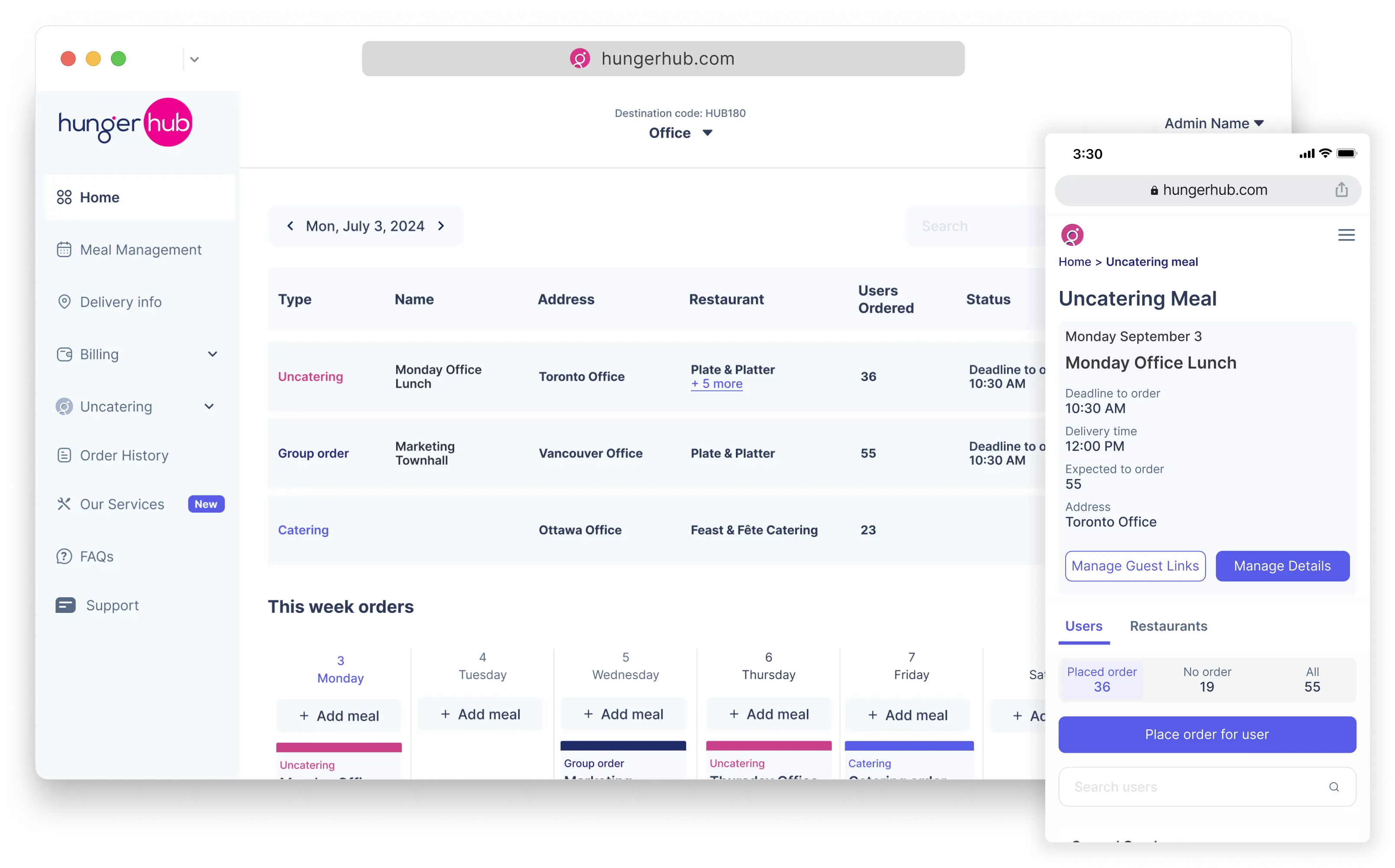
Catered breakfast also spares the organizer a stressful commute. Picking up pastries and coffee on the way in sounds easy until the café line stretches out the door. Handing the food over to a caterer frees the host to focus on the agenda. Offices that host breakfast on a regular schedule may also consider an Uncatering™ office meal plan, where employees pick their own meals and food arrives labeled with their names.
Plan Your Headcount and Budget Early
Start with a firm headcount. Send a quick calendar poll or RSVP request a few days ahead, then add a small buffer for late additions. Hybrid offices can be tricky because attendance changes from week to week. Ordering a few extra portions usually covers walk-ins without creating much waste.
Next, set a per-person budget. Breakfast generally costs less than lunch, leaving room for premium coffee or fresh fruit. Decide early if the budget includes delivery, setup, and cleanup. Clear numbers make it easier for a caterer to suggest a menu that fits your plans.
Ask for delivery about 20 to 30 minutes before the meeting begins. Hot items hold their heat well in insulated packaging, and the buffer gives you time to arrange the table before guests walk in.
Office Meeting Breakfast Ideas Your Team Will Enjoy
A well-planned spread balances comfort food with lighter choices. Variety keeps the table interesting and gives people with different appetites something to reach for. Here are a few combinations worth trying:
- Hot breakfast sandwiches: Egg and cheese on English muffins or croissants travel well and suit a quick meeting.
- Yogurt parfait bar: Greek yogurt, granola, and fresh berries let guests assemble a lighter plate.
- Pastry and bagel platter: Muffins, croissants, and bagels with cream cheese are easy crowd pleasers.
- Breakfast burritos: Wrapped portions stay warm and work well for longer sessions.
- Fruit and protein boxes: Hard-boiled eggs, cheese, and sliced fruit offer a filling option with fewer carbs.
- Oatmeal station: Steel-cut oats with nuts, honey, and dried fruit suit cooler Canadian mornings.
Pull from local kitchens when you can. Toronto has excellent bakeries and cafés, and our local restaurant partners bring that variety straight to the boardroom.
Plan for Dietary Needs Without the Stress
Dietary restrictions deserve attention at breakfast. Eggs, dairy, wheat, and nuts show up in many morning staples, so a standard pastry tray can leave several guests with little to eat. Ask attendees about allergies and preferences in your RSVP form. Common requests include vegetarian, vegan, gluten-free, dairy-free, and nut-free options.
Labeling matters as much as the menu itself. Clear cards beside the dishes help guests choose quickly and avoid awkward questions. Individually packaged meals with names on them go a step further. They reduce cross-contact and let people grab their order and sit down. Our team often suggests this approach for groups with several allergies, as it keeps things simple for the host.
Choose a Catering Format That Fits the Meeting
The meal format shapes the whole experience. Family-style trays work well for casual team breakfasts where people mingle and graze. They encourage conversation and keep costs reasonable for larger groups.
Individually boxed meals suit formal meetings and client presentations. Guests can eat at their seats without leaving the table, and the room stays tidy. Boxed meals also help with staggered arrivals, as late guests can pick up a box without interrupting the session.
Recurring breakfasts, such as a weekly team kickoff, call for a different setup. Ordering from scratch each week becomes tedious fast. A scheduled program with personal logins lets employees choose their own meal ahead of time, which cuts down on waste and keeps the menu fresh.
Keep Cleanup and Leftovers Simple
Cleanup often gets overlooked until the meeting wraps and the room is booked again in fifteen minutes. Decide ahead of time who handles it. Managed catering services commonly include breakdown and cleaning, which lets staff head back to their desks.
Leftovers deserve a plan too. Wrap extra pastries and fruit, then move them to the office kitchen with a friendly note. Put perishable items like eggs and yogurt in the fridge within two hours. A quick message afterward asking what people enjoyed will help you refine the menu for next time.
Turning Morning Meetings Into Moments Your Team Looks Forward to
Great breakfast catering comes down to a few steady habits. Confirm headcount early, plan for dietary needs, time the delivery with care, and arrange the room with flow in mind. Small details like labels and a separate coffee station make a real difference to how the morning feels.
Our team works with offices to plan breakfasts for quick standups, training days, and client meetings. If a breakfast meeting is coming up on your calendar, reach out and let's plan a morning menu your team will be talking about.
FAQs
How far in advance should we order breakfast catering for the office?
Aim to place your order two to three business days before the meeting. Larger groups or events with several dietary requests benefit from about a week of lead time, which gives restaurants room to plan ingredients and staffing.
How much coffee should we plan per guest?
A good starting point is one to two cups per person for a morning meeting. Sessions that run past two hours usually call for a second round, so ask your caterer about a coffee refresh partway through.
Can catered breakfast arrive before 8 a.m.?
Early delivery is often possible, though availability depends on restaurant hours and your location. Confirm the delivery window when booking and share building access details, such as loading dock or security desk instructions, to avoid delays at the door.